Arras
Surprised by JoyArras is a key setting in C. S. Lewis’s account of his First World War service: a place where military life brought unexpected companionship, especially in contrast to the coercive school culture he remembered from Wyvern. His recollections connect the town both to the villages near the front where he served and to moments of unsolicited welcome from older officers.
Military setting and service
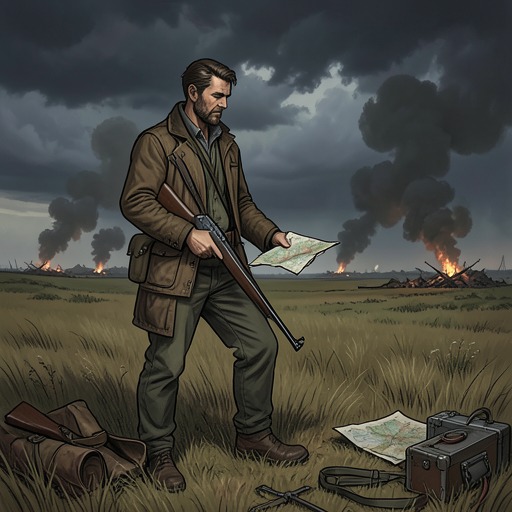
After training and receiving a commission as a Second Lieutenant in the Somerset Light Infantry, Lewis reached the front line on his nineteenth birthday in November 1917. He saw much of his service in villages before Arras, including Fampoux and Monchy, and was wounded near Lillers in April 1918. Arras thus belongs to the landscape of his wartime service, although his account does not describe the town as a battlefield in itself.
Encounters in the Officers’ Club
One remembered evening places Lewis alone at dinner in the Officers’ Club at Arras, content with a book and wine. A bottle of Heidsieck then cost eight francs, while Perrier Jouet cost twelve. Near the end of the meal, two very senior officers, distinguished by their ribbons and red tabs, came over, called him “Sunny Jim,” and invited him to join them for brandy and cigars. Lewis stresses that the gesture was goodwill, not drunkenness or an attempt to intoxicate him.
The incident was exceptional but not isolated in spirit. Lewis recalls that the army brought him into contact every few days with scholars, original thinkers, poets, comic storytellers, and, at the least, people of good will. In Arras, the two officers’ friendly attention turns an otherwise solitary meal into a brief instance of belonging within an unfamiliar military world.
Contrast with school and the army
Lewis’s account sets such military encounters against his experience at Wyvern, where older boys held power over juniors and school life could be exhausting. He reflects that adults were naturally kinder to nineteen-year-olds than nineteen-year-olds were to thirteen-year-olds, and suggests that his own changed expression may also have invited pity or amusement. The warmth he met in Arras therefore registers not as proof that the army was pleasant—he calls it detestable—but as evidence that shared hardship and adult goodwill could produce a different kind of social relation.
That contrast shapes the town’s significance in the memoir. Arras appears not through an extended description of its streets or history, but through a sharply situated social encounter: Lewis alone with his book and wine, then unexpectedly welcomed by two officers. The scene belongs to his recollection of military life as an odious necessity that could nevertheless contain fleeting, humane connections.